September 24, 2026
6 min
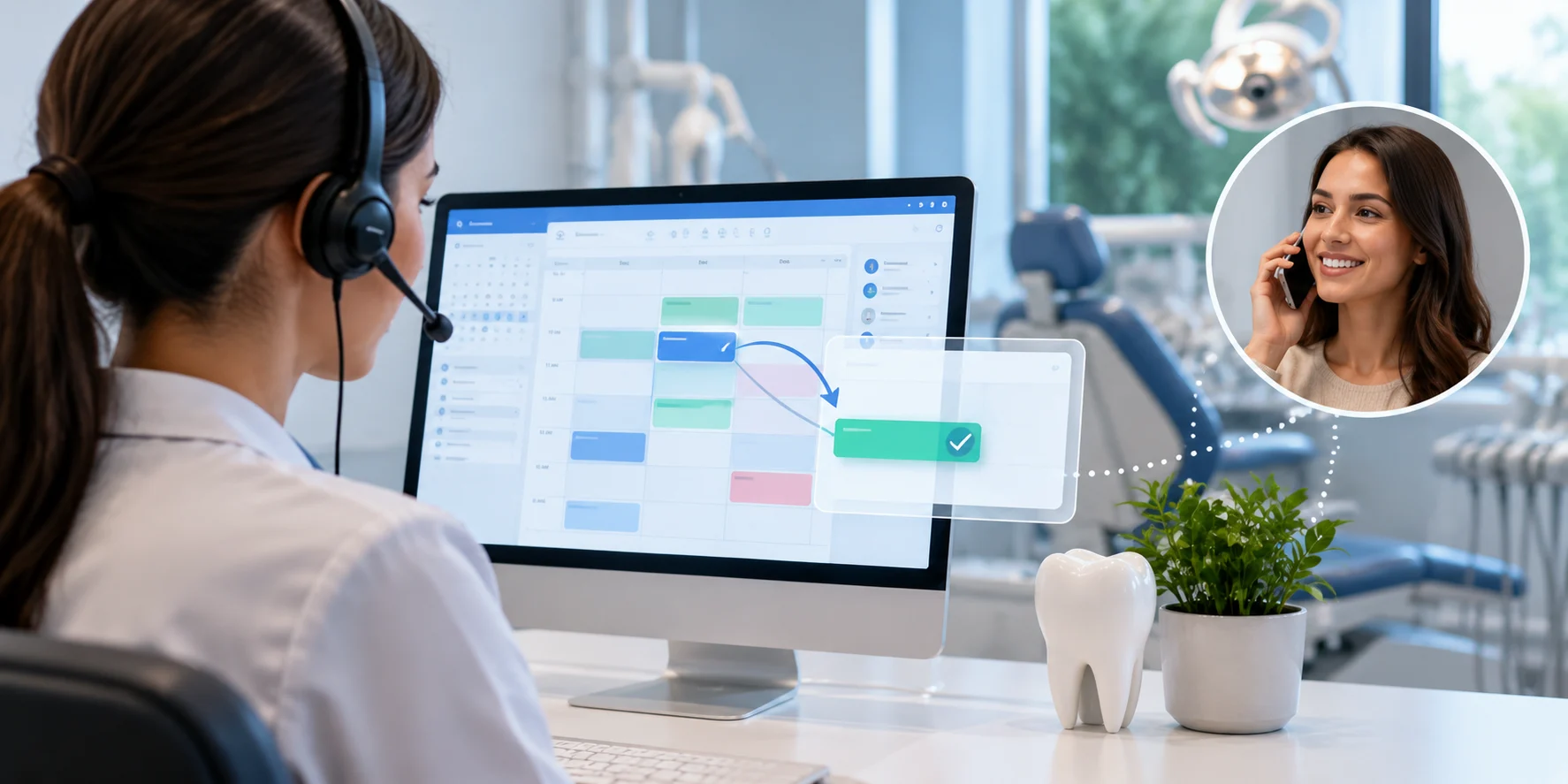
An AI receptionist checks real-time schedules, matches providers and rooms, and confirms before updating, helping dental practices reschedule appointments without double-booking.
January 16, 2026
8 min
Discover how effective follow-up care enhances patient retention, improves health outcomes, and fosters loyalty in healthcare practices.

If you want a relationship to last, you have to keep working at it after the first date. The same is true of patients. Follow up care is not a courtesy call your front desk squeezes in when things are slow. It is the mechanism that keeps people coming back, and without it, even a practice with excellent clinical work and a full new patient funnel will leak revenue it never sees leaving.
This guide is for clinicians and practice managers who want to understand why follow up care importance goes well beyond politeness, how to build a system that runs without heroics, and how to tell whether it is actually working. You will see what timing and channel perform best, get templates you can copy directly, and learn how to connect the technology so the whole workflow runs, and improves, largely on its own.
Before fixing anything, it helps to see exactly where practices lose patients, because the fix looks different depending on which stage is failing.
1) Early drop off in the first six to twelve months. Most systems fail right at the start. Reviews of addiction treatment programs, an extreme but instructive example of care that depends entirely on follow through, find only about 57 percent of patients stay engaged even through the first year. Losing someone early is not just a missed visit. It kills momentum, shrinks what you can do clinically, and reduces long term value for both the patient and the practice. These early losses directly undermine the outcomes covered in our guide to patient retention strategies.
2) Missed post procedure follow ups. No show rates for post treatment check ins run somewhere between 12 and 50 percent depending on the type of care. That is not just a scheduling inconvenience. It means higher clinical risk, a worse patient experience, and lost loyalty. Missed check ins also come back around financially: higher costs later, more emergency visits, more complaints, and less predictable revenue. This mirrors what we found when we broke down how missed follow ups drain clinic revenue over time.
3) Chronic care black holes. Chronic conditions are notorious for losing patients between visits. Virtual care models cut non attendance meaningfully, with reported odds ratios around 0.61, but only when the follow up is personal and on time. Otherwise the promise of scheduled, ongoing care quietly evaporates, and so do the outcomes tied to it. The predictive approaches covered in our piece on predictive analytics in dental care show how proactive outreach reduces this specific kind of drop off.
4) Discontinuity of care. Continuity always wins on outcomes, but it is genuinely rare. Hospital systems retain roughly half of outpatients for meaningful follow up, while remote and hybrid models often do noticeably better, up to 75 percent in some reported cohorts. Lose that thread and patients detach quietly, feedback loops disappear, and future outcomes trend downward. Understanding patient journey mapping helps a practice see exactly where that continuity tends to break.
5) Operational drag and the ripple effect. Every missed follow up step pulls staff away from productive work to chase loose ends manually. Automated reminders, simple online booking, and persistent but lightweight outreach cut no shows and keep the whole system moving without constant manual intervention. The bottom line: holding a patient's attention after the visit pays off in satisfaction, clinical safety, and revenue, especially paired with the kind of automation covered in how DSOs reduce no shows with automated reminders.
Retention is not luck. It is the result of engineering the right touchpoints and removing friction from the patient's side of the interaction. Give people timed reminders and a genuinely simple way to reschedule, and attendance improves, satisfaction improves, and both feed directly into retention and lifetime value.
Retention improves because rebooking stops being a slog. Every touch, a reminder, an open scheduling link, a follow up message, keeps patients orbiting the practice instead of drifting toward whoever responds fastest when they eventually need care again.
Clinical outcomes improve because timely, specific messages catch small problems early, before a manageable issue turns into an emergency and before a chronic condition spirals without anyone noticing.
Satisfaction and loyalty improve because a check in at the right moment signals that someone is paying attention. Add a layer of personalization and satisfaction scores climb, with loyalty following close behind. A well timed nudge reinforces the kind of trust that shows up later in reputation management for dentists.
No show rates drop because two reminders consistently beat one. This is not complicated, and yet very few practices do it consistently. Sending a reminder three days out and another the day before is a small operational change with an outsized effect.
Personalization works because segmenting by condition or risk level and sending messages that are obviously written for that patient, rather than a generic blast, measurably improves re engagement and long term retention numbers.
None of this is guesswork. Meta analyses back the general pattern, and studies on virtual care and accessible scheduling show it lowers the odds that a patient drops out of a care plan entirely, while A/B testing consistently shows that more reminders correlate with fewer missed appointments. At this point it is less a question of whether the approach works and more a question of whether a practice actually runs it.
Here is a straightforward structure that produces results in real practices, whether the case is urgent, routine, or a chronic care relationship spanning years. Adapt freely.
1) Onboarding, the first touch. Purpose: confirm administrative details, set expectations, and ask how and where the patient actually wants to be contacted. How: a welcome call plus a text or email with a portal link and instant self scheduling for future visits, which works especially well paired with digital dental forms. Timing: immediately after scheduling, with a reconfirmation at 24 hours, and a staff call triggered at 48 hours if there is still no confirmation.
2) Immediate post visit, 24 to 72 hours. Purpose: confirm nothing has gone wrong and escalate anything that looks risky. How: text or portal message for routine check ins, a phone call the moment a red flag shows up. Timing: within 24 to 72 hours of the visit, routed to a nurse or clinician for anything concerning.
3) Short term follow up, 7 to 14 days. Purpose: a recovery check and any adjusted instructions the patient needs. Timing: matched to the specific clinical need. If a message goes unanswered, nudge by text or email, then escalate to a call after two or three days of silence.
4) Chronic cadence, 30, 90, and 180 days. Purpose: stay ahead of long haul concerns, medication questions, preventive care needs, or new symptoms. Higher risk patients get extra touchpoints layered on top of the standard cadence.
5) No shows. What to do: send an immediate text and email with a personalized rebooking link, then follow up with a phone call if there is no response. This works particularly well when connected to the kind of lead management workflows built for DSOs, which already track lead source and urgency in one place.
A couple of variations consistently perform well. Telehealth combined with on demand scheduling reduces non attendance meaningfully, with reported odds ratios around 0.61. Randomized data also confirms that two reminders outperform one; a combination sent at three days and one day before the appointment is a reasonable default to start with.
A few things keep the whole system tidy. Use simple reply codes, a patient can text back one for confirmed and two to flag an issue, so red flags route directly to whoever needs to see them. Build reschedule links that work in a single tap, with no login or searching required. And put extra effort, sometimes a hand delivered call from a real person, behind your highest risk ten to twenty percent of patients rather than spreading that effort evenly.
How to automate without losing the human touch. The data is consistent on this point: run at least two reminders, one three days out and one the day before. In a trial covering 54,000 patients, double reminders cut missed appointments down to 4.4 percent, compared with 5.8 and 5.3 percent for a single reminder. A sensible default flow starts with a confirmation message, adds two reminders, includes a real time check in on the day itself, and follows up after the visit, especially for anyone flagged as higher risk.
Keep text messages administrative. Something like "3pm Tuesday with Dr. Smith, reply 1 to confirm, 2 if there is an issue, tap here to reschedule" moves fast and gets fast replies. Save detailed clinical information for a secure portal or encrypted email instead. Short, simple messages route faster and get answered faster.
You do not need a hundred message templates. Three cover most of the real work: a post op check in, a chronic care check in, and a no show rebooking message. Most vendor platforms already ship a reasonable starting library, so there is rarely a need to write these from scratch.
Making the technology work together. Two way syncing matters for everything that counts: appointment status, scheduling clicks, message responses, and timestamps. If your systems are not FHIR or HL7 compliant out of the box, middleware can usually bridge that gap without a full platform replacement. The fields worth tracking include patient and appointment identifiers, visit type, communication channel, consent status, outreach history, and any flags for clinical concerns. The richer that data set, the more accurately you can automate and measure what is actually happening.
Run periodic tabletop tests through the real workflow end to end, watch message delivery and response rates, and surface everything that matters, conversion, retention, response time, in one dashboard rather than scattered across several tools.
Compliance without fear or fuss. Insist on signed business associate agreements, encrypted channels, and role based access from any vendor you work with. Cutting corners here creates the same kind of exposure covered in our overview of dental HIPAA violations, which tend to originate from exactly this kind of loosely managed follow up communication. Never put protected health information directly in a text message; clinical detail belongs in the portal. Track consent and opt outs consistently, keep records organized, and train staff on the handful of things that actually matter rather than burying them in policy documents nobody reads.
The metrics that matter are not complicated, but they do need to be tracked consistently rather than checked occasionally.
Retention rates at 30, 90, and 180 days, broken out by cohort. No show rates. Rebooking and conversion after outreach. Patient satisfaction, whether that is a formal NPS score or something simpler your team trusts. Patient lifetime value. And care continuity, measured as the percentage of patients who completed a recommended follow up as scheduled.
A useful dashboard tracks all of the above plus who received which message, when, and whether they responded, with revenue and clinical outcomes layered in where relevant. Structure it to surface bottlenecks directly: a retention grid, a scheduling funnel, and a clear view of average time to rebook. Review the operational numbers weekly, the trend lines monthly, and the big picture quarterly. Many practices simply repurpose an existing marketing dashboard rather than standing up a separate system, which works fine as long as the right fields are being tracked.
A few things are worth testing directly rather than assuming. Timing: two reminders at three days and one day out consistently beats a single reminder, though it is still worth confirming that locally with your own patient base. Risk targeting: putting extra effort behind your riskiest visits produces incremental but real improvement, with randomized studies showing relative risk reductions around 0.93 in primary care settings and 0.89 in mental health settings when extra texts are added. Channel and content: mixing text, email, and portal messaging, and personalizing where you reasonably can, tends to outperform a single generic channel, and a simple cohort comparison is usually enough to confirm it without needing anything elaborate.
Whatever you test, keep governance intact throughout. Opt outs stay clean, business associate agreements stay signed, protected health information stays out of text messages, and audit logs keep running. None of that should drift just because an experiment is in progress.
Practices that centralize these metrics using unified data dashboards tend to spot bottlenecks faster and iterate with far more confidence than practices piecing the picture together from several disconnected reports.
A mid sized dental group, before and after. Before connecting their practice management system to a proper CRM, reminders were scattered, staff spent hours on manual catch up calls, and patients were frustrated by a clunky rescheduling process. After the integration: text and email reminders at three days and one day out, automated confirmations, and one tap rebooking links with no login required. No shows fell and more visits converted, consistent with the trial data showing two reminders beating one, 4.4 percent missed versus roughly 5.8 percent. Exact figures depend on the specific practice, but the direction of the result holds consistently.
A chronic care program. This team layered nurse check ins and genuinely personalized outreach onto their highest risk patients. Before the change, patients tapered off gradually, and the ones with the most to lose clinically were often the first to disappear. After the change: tailored reminders, secure medication checks, and immediate flagging for clinical concerns. Remote follow up models tend to drive meaningfully higher retention for chronic illness specifically, with one reported cohort reaching roughly 75 percent retention to outcome versus 52 percent for a traditional hospital based model. In addiction treatment specifically, median annual retention sits around 57 percent, but well timed, consistent follow up makes longer engagement genuinely achievable rather than aspirational.
A short list to start with this week: launch a 24 to 72 hour post visit check in that is simple to reply to by text or portal, embed one tap scheduling links in every reminder so nobody has to go hunting for a calendar, automate your three most common templates, start tracking cohort retention at 30, 90, and 180 days and connect any workflow change directly to movement in those numbers, and use a practice management system integration that supports customization and real reporting rather than a black box.
Patient retention, clinical outcomes, and practice economics move together, not separately. Getting there means setting up a multi touch, automated reminder sequence, putting one tap scheduling in every piece of outreach, personalizing by risk level, tracking retention at consistent intervals, and testing timing and channel deliberately rather than by instinct. Dental groups and DSOs specifically benefit from starting with an AI augmented, practice management system integrated CRM, such as ConvertLens' dental CRM, built around exactly this kind of workflow. The pattern that works: centralize the data, automate the routine touches, personalize where it counts, measure consistently, and keep iterating. Start with what you already have, watch what actually shifts the numbers, and put more effort behind whatever the data says is working.
How soon after a visit should a practice check in?
Most of the clinical value sits in the first 24 to 72 hours after the visit. For purely administrative follow up, same day or the next business day is sufficient.
What is the most effective channel for follow up care?
Text gets the fastest response by a wide margin, but pairing it with email or a secure portal for detail, and escalating to a phone call for any clinical red flag, consistently outperforms relying on a single channel. Patient channel preference matters too, so it is worth asking upfront during onboarding.
How many reminders should a practice actually send?
At least two: one around 48 to 72 hours before the appointment, and a second the day of or the day before. Large randomized trials consistently show two reminders outperforming one, with missed appointment rates around 4.4 percent versus 5.3 to 5.8 percent for a single reminder.
Are targeted reminders for high risk patients worth the extra effort?
Yes. If a practice can identify patients most likely to no show, concentrating effort there produces a measurable, if incremental, improvement. Studies using automated risk flags in electronic health record systems show that targeted outreach to flagged patients reduces no shows more than blanket messaging alone.
How does a practice stay HIPAA compliant while automating follow up?
Use secure, consented communication channels, keep protected health information out of text messages, track opt ins and opt outs consistently, sign business associate agreements with every vendor involved, encrypt everything in transit, and train staff on the essentials. It does not need to be more complicated than that.
Is it worth running small A/B tests on follow up messaging?
Yes. Vary timing, channel, and frequency, randomize where practical, and track the outcomes that matter: no show rate, conversion, and response time. A small, honest test beats waiting for a theoretically perfect follow up system that never actually launches.
When should a follow up message get escalated for clinical review?
Any red flag in a patient reply should trigger immediate escalation. If a message goes unanswered past the expected window, that should automatically trigger a phone call or case review through a simple, predefined set of branching rules rather than relying on someone remembering to follow up manually.


September 24, 2026
6 min
An AI receptionist checks real-time schedules, matches providers and rooms, and confirms before updating, helping dental practices reschedule appointments without double-booking.
September 23, 2026
6 min
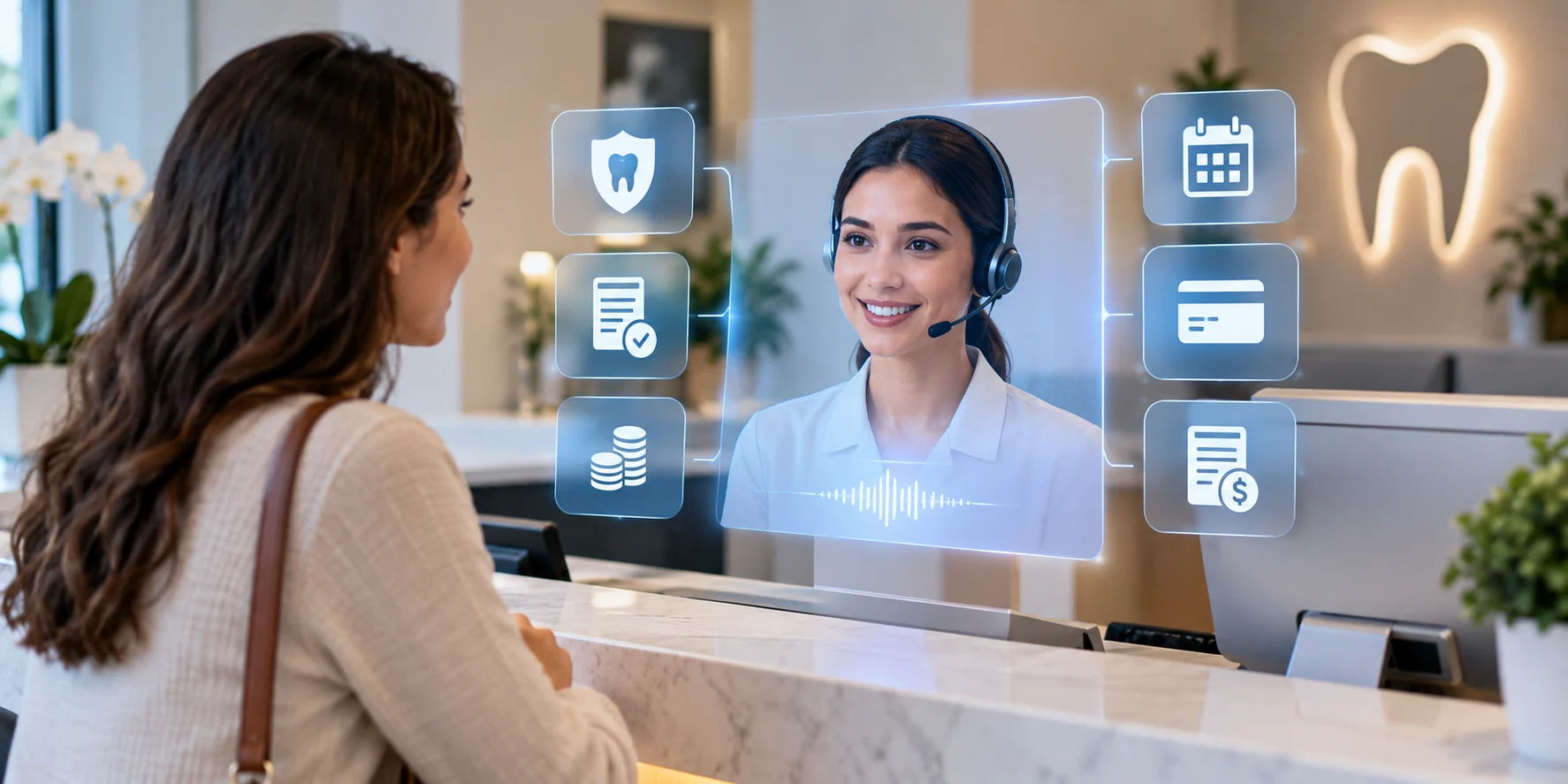
AI receptionists can explain insurance verification, collect plan details, clarify billing terms, and answer payment questions, then pass complex account issues to your billing team.

September 21, 2026
9 min
Improve dental patient experiences with engagement technology that streamlines scheduling, strengthens retention, and eases front-desk workload.
Sign Up Now & Someone from Our Team Will Be in Touch Shortly!
Use the form below to send us a message, and we’ll get back to you as soon as we can.
.webp)
Track every marketing dollar and optimize patient conversions with ConvertLens. Gain valuable insights from your campaigns, ensuring you never miss a potential patient. Maximize ROI and grow your practice effortlessly.
-p-500.webp)